0

You can remineralize teeth, but only up to a point. Your enamel loses and regains minerals every day, and good habits can tip that balance back in your favour: fluoride toothpaste, fewer sugar and acid attacks, more saliva and a mineral-rich diet. This can stop early enamel damage (a white spot) and even reverse it. It cannot regrow lost enamel or heal a cavity that has already formed.
Can you remineralize teeth?
Yes, in the early stage of tooth decay. When acids pull minerals out of enamel, a chalky white spot can appear. According to the US National Institute of Dental and Craniofacial Research (NIDCR), tooth decay can be stopped or reversed at this point, with the help of saliva and fluoride.
Remineralization has clear limits:
- It works on early lesions: white spots and weakened enamel that hasn’t broken down yet.
- It doesn’t regrow enamel: enamel has no living cells, so enamel lost to wear or erosion doesn’t grow back.
- It doesn’t fill a hole: once a cavity has formed, the damage is permanent.
| Stage | What you see | Can it be reversed? | Who can help |
|---|---|---|---|
| Weakened enamel | Nothing yet | Yes | You, with daily habits |
| White spot | A chalky, matte patch | It can be stopped, and sometimes reversed | You, with a dentist’s follow-up |
| Cavity | A hole, a dark spot, pain | No | A dentist: it needs a filling |
| Worn or eroded enamel | Thin, yellowish, sensitive teeth | No: lost enamel doesn’t grow back | A dentist |
Can cavities heal on their own?
No. The NIDCR describes a cavity as permanent damage that a dentist has to repair with a filling. Home remedies can help stop early decay from getting worse, but no toothpaste, diet or rinse can close a cavity, whether in two days or two months. If you have pain, a visible hole or a dark spot that keeps growing, see a dentist.
How long does it take to remineralize teeth?
There’s no fixed timeline. The exchange of minerals between saliva and enamel happens every day, but visible or measurable change in an early lesion is slow. It depends on how deep the lesion is, how often your teeth face acid attacks and how consistent your routine is.
To set realistic expectations:
- Think months, not days. Clinical studies on remineralizing toothpastes follow lesions over months: in the trials reviewed by a 2025 meta-analysis, lesions were compared after six months.
- Some white spots never fully fade. Saliva mainly remineralizes the surface layer of a lesion. Research on white spots left after orthodontic braces notes that deeper lesions improve little in appearance, and some remain visible for years.
- Stopping progression is already a success. A lesion that stops growing and hardens is the realistic goal.
A dentist can tell you whether a lesion is still active and follow it over time.
| When | What studies observed |
|---|---|
| Every day | Minerals move in and out of the enamel surface. Nothing visible |
| First 6 months | White spots left after braces improved the most in this period (study of 351 lesions) |
| 6 months to 2 years | No further significant improvement in the same study |
| After 2 years | Of 351 lesions: 145 had improved, 171 were unchanged, 35 were worse and 10 had disappeared |
What is tooth remineralization, and why does it matter?
Enamel is the hard outer layer of your teeth. It’s mostly made of a calcium phosphate mineral called hydroxyapatite. Every time you eat or drink sugars and starches, plaque bacteria produce acids that dissolve some of these minerals: this is demineralization.
Between these acid attacks, saliva neutralizes the acids and brings calcium and phosphate back to the enamel surface: this is remineralization. Fluoride, the trace mineral in toothpaste and fluoridated water, helps this repair and forms fluorapatite, which resists acid better than the original enamel.
Your teeth go through this tug-of-war all day long. The problem starts when acid attacks win too often.

An early lesion looks white, matte and chalky.
How demineralization turns into tooth decay
Frequent snacking, sugary drinks and poor plaque control keep your mouth acidic for long periods. Saliva doesn’t get enough time to repair the enamel, so mineral loss builds up:
- Weakened enamel: no visible change yet.
- White spot: a chalky, matte patch where minerals have been lost. This stage can still be stopped or reversed.
- Cavity: the surface breaks down and a hole forms. This needs a dentist.
Acid from food and drinks can also wear enamel away directly, without bacteria. That’s called erosion: read our guide to enamel erosion to learn more.
5 steps to remineralize teeth naturally at home
None of these steps is a quick fix. Together, they give your saliva and fluoride the best conditions to repair early damage.
1. Brush twice a day with a fluoride toothpaste
Fluoride is the best-studied remineralizing agent, and the American Dental Association (ADA) recommends brushing twice a day with a fluoride toothpaste.
- Brush twice a day for two minutes.
- Adults should use a toothpaste with at least 1,350 ppm fluoride, as advised by the NHS (check the label).
- Spit, don’t rinse: rinsing with water or mouthwash straight after brushing washes away the fluoride left on your teeth. Use mouthwash at another time of day.
- If you get cavities often, ask your dentist whether a higher-strength fluoride toothpaste suits you.
Using a whitening toothpaste? Choose a non-abrasive one, and make sure your routine still gives your teeth fluoride. The Brilliant Smile whitening toothpaste we use is non-abrasive and peroxide-free: it’s designed to keep teeth bright after whitening, not to remineralize them.
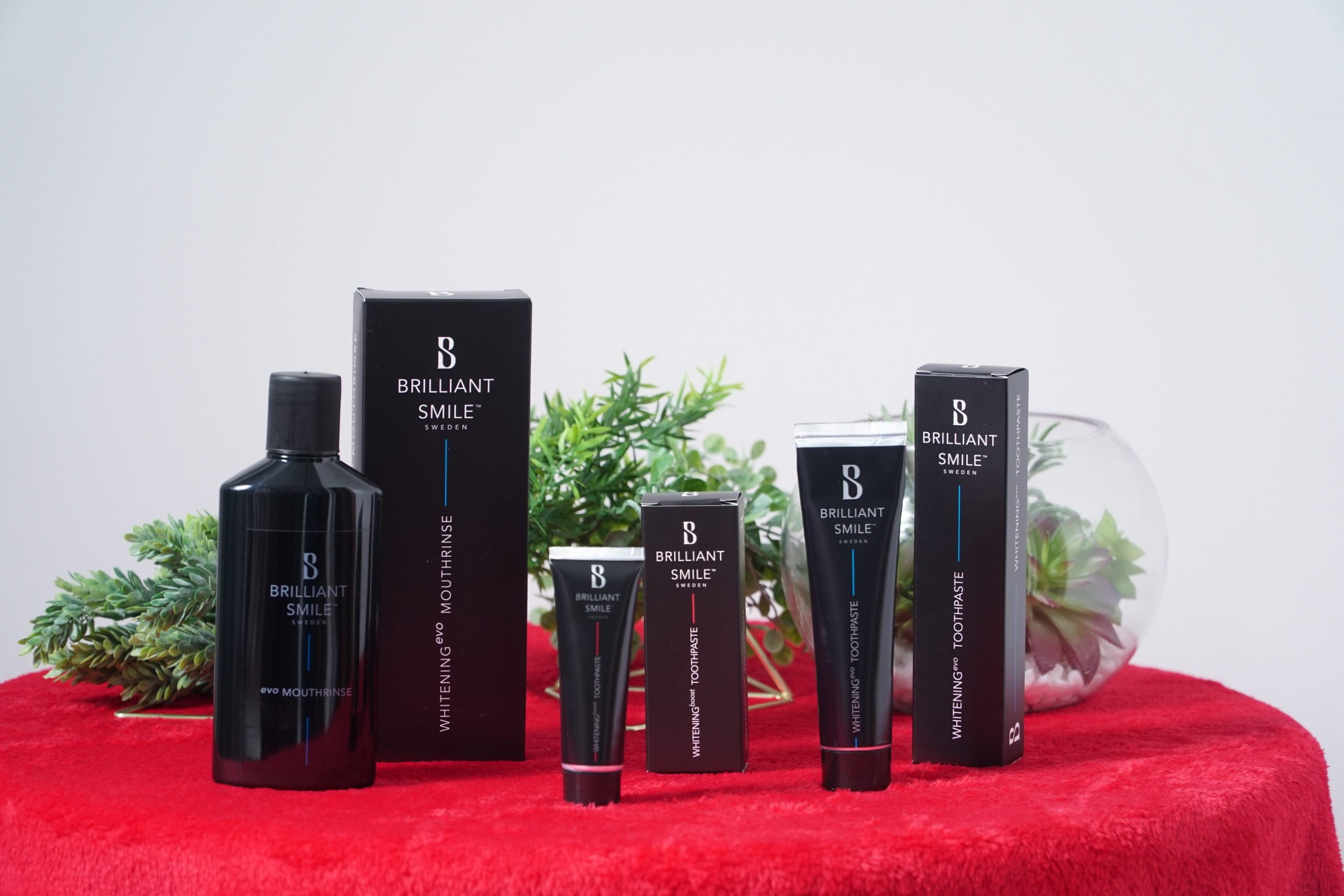
Brilliant Smile whitening toothpaste and mouthwash: for upkeep after whitening, not for remineralizing.
2. Cut down on sugar and acid attacks
How often you eat sugar matters as much as how much. Each sugary snack or drink restarts an acid attack, so sipping soda or juice all afternoon gives your enamel no break.
- Keep sweets and sugary drinks to mealtimes rather than grazing between meals.
- Drink acidic drinks (soda, juice, wine) with a straw, and rinse with water afterwards.
- Wait an hour before brushing after acidic food or drinks: the ADA advises this so saliva can re-harden the softened enamel first.
Many acidic foods and drinks also stain: see our list of everyday foods and drinks that stain your teeth.
3. Keep your saliva flowing
Saliva is your mouth’s natural repair system: it neutralizes acids and carries the calcium and phosphate that rebuild enamel.
- Chew sugar-free gum for about 20 minutes after meals. The ADA notes that this increases saliva flow and helps prevent tooth decay. Look for gums sweetened with xylitol, sorbitol or other sweeteners that don’t cause cavities.
- About xylitol: it doesn’t feed the bacteria that cause decay. A Cochrane review found only low-quality evidence that it reduces cavities, so treat it as a plus, not a cure.
- Drink water through the day, especially in hot weather.
- If your mouth often feels dry, mention it to a dentist or doctor: some medicines reduce saliva.
4. Eat foods that support remineralization
No single food rebuilds enamel, but some help neutralize acids or supply the minerals your saliva needs.
| Food | Why it helps |
|---|---|
| Cheese, milk, plain yogurt | Calcium and phosphate. The ADA suggests milk or cheese after acidic food or drinks to help neutralize acids. |
| Sardines and canned fish with bones, eggs, meat | Phosphorus, plus calcium for fish eaten with the bones. |
| Leafy greens, almonds, sesame and chia seeds | Plant sources of calcium. |
| Fatty fish and eggs | Vitamin D, which your body needs to use calcium. |
| Water | Rinses away sugars and acids, and supports saliva. |
A few points to keep in mind:
- Vitamin D: a review of older clinical trials in children found that vitamin D may reduce tooth decay, but the certainty of that evidence is low. Get enough of it, but don’t expect a supplement to repair enamel.
- Bone broth: it’s often recommended online. It contains some minerals, but no clinical study we know of shows that it remineralizes teeth.
- Starchy snacks: crackers, chips and white bread break down into sugars in your mouth. Eat them with meals rather than as snacks.
5. Keep up good oral hygiene
Plaque is where the acids come from, so removing it every day protects your enamel.
- Use a soft-bristled toothbrush and don’t scrub hard.
- Clean between your teeth once a day with floss or interdental brushes.
- Have regular dental check-ups so early white spots are spotted before they become cavities.
For a complete routine, read our guide to oral hygiene.
Remineralizing toothpaste: fluoride or hydroxyapatite?
Most “remineralizing” toothpastes rely on one of two ingredients.
Fluoride is the reference. It has decades of research behind it, it helps rebuild weakened enamel and it makes enamel more resistant to future acid attacks. If you’re not sure what to buy, a regular fluoride toothpaste is the evidence-based choice.
Nano-hydroxyapatite is a synthetic version of the mineral that enamel is made of, used in fluoride-free toothpastes. A 2025 systematic review and meta-analysis found no significant difference between hydroxyapatite and fluoride toothpastes on the development and progression of early lesions. It only included four studies, all in people under 25, so the evidence is still limited. The ADA only grants its Seal of Acceptance for cavity protection to toothpastes that contain fluoride.
In short: hydroxyapatite is a reasonable option if you want to avoid fluoride, but it isn’t a proven upgrade.
What works to remineralize teeth: the evidence
| Method | What studies show | Strength of evidence |
|---|---|---|
| Fluoride toothpaste | Prevents cavities compared with non-fluoride toothpaste (Cochrane review of 96 studies) | Strong |
| Fluoride varnish (at a dental clinic) | Prevents tooth decay in children and teenagers (Cochrane review of 22 trials) | Moderate |
| Nano-hydroxyapatite toothpaste | No significant difference from fluoride on early lesions, in four small studies | Limited |
| Calcium phosphate pastes (CPP-ACP) | May help white spots after braces. The studies are of low quality | Limited |
| Sugar-free gum | Fewer cavities in people who chew it, according to a 2020 review | Tentative |
| Xylitol | A possible small benefit when added to fluoride toothpaste | Low |
| Vitamin D | May reduce tooth decay in children, in older trials | Low |
| Oil pulling, salt water, bone broth | No reliable study | None |
What does tooth remineralization look like? (before and after)
Don’t expect a dramatic before-and-after photo. Remineralization happens inside the enamel, and the changes are subtle:
- Before: an active early lesion tends to look white or yellowish, matte and chalky, and feels rough.
- After: a lesion that has stopped progressing tends to look smoother and shinier, and feels hard. It may become less noticeable, but it often stays visible.
Only a dental exam can tell whether a lesion is active or has stopped. Also note that remineralization doesn’t make your teeth whiter: many “before and after” pictures online actually show whitening results.
Signs your teeth are remineralizing
- A white spot looks less chalky and a little shinier.
- The surface feels smooth and hard instead of rough.
- The spot has stopped growing from one check-up to the next.
- Sensitivity in that area has eased.
You can’t confirm any of this at home. A dentist checks it with an examination, and sometimes with X-rays.
When to see a dentist about weak teeth
Home care is a good start, but some signs need a professional opinion. See a dentist if you notice:
- white, brown or dark spots on your teeth;
- rough, chalky patches or a surface that feels broken;
- sensitivity to hot, cold or sweet foods;
- toothache, or food getting stuck in the same place;
- frequent cavities despite brushing.
Catching decay at the white-spot stage gives you the best chance to stop it without a filling.

A dentist can tell whether a white spot is still active.
Professional treatments that strengthen enamel
If you’re at higher risk of decay, a dental clinic may suggest:
- Fluoride varnish: a concentrated fluoride coating painted on the teeth. Cochrane reviews show it helps prevent tooth decay in children and teenagers.
- High-fluoride toothpaste: available on a dentist’s advice for people who get cavities often.
- Remineralizing gels or pastes, such as calcium phosphate or hydroxyapatite products, for specific cases like white spots after braces.
The Smile Bar only does teeth whitening, with an optional cleaning and scaling. We don’t treat tooth decay: for white spots or cavities, see a general dental clinic.
Remineralization vs. whitening: what’s the difference?
They’re often confused, but they do different jobs:
- Remineralization puts minerals back into weakened enamel. It helps prevent decay, but it doesn’t change the shade of your teeth.
- Whitening lightens stains inside the tooth for a brighter smile. It doesn’t treat decay or rebuild enamel.
If you have sensitive teeth, white spots or suspected decay, have them checked before whitening. Our guide Is teeth whitening safe? explains what to look out for.
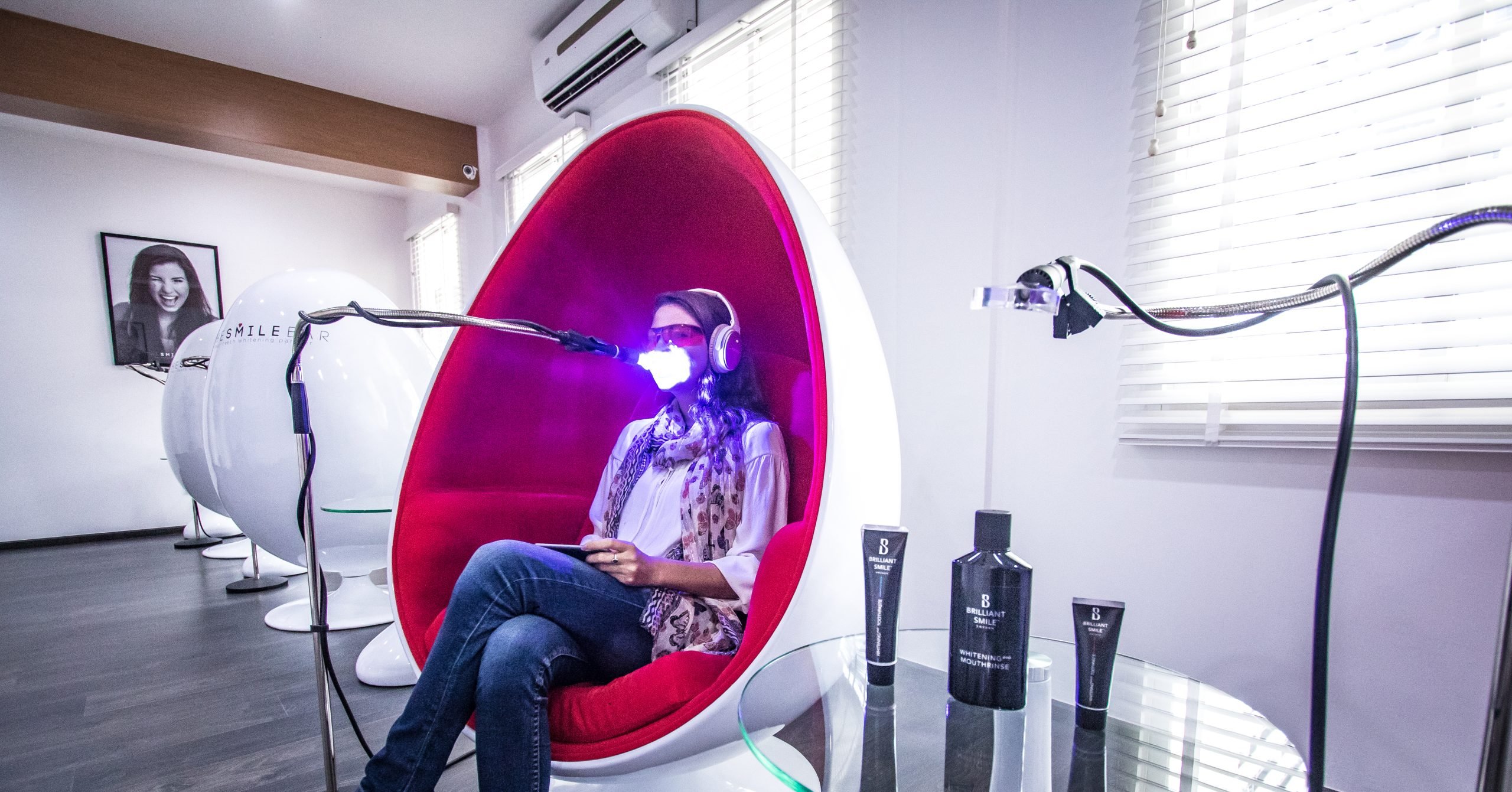
Whitening lightens the shade of the teeth. It does not rebuild enamel.
Protecting your enamel after whitening
Does whitening demineralize enamel? Slightly, and for a short time. A 2026 review of lab studies found a small drop in enamel hardness after peroxide whitening, with no clear sign that it matters clinically. A review of studies in people found the changes are mostly temporary: saliva restores the enamel surface, typically within 7 to 15 days. If your teeth feel sensitive after whitening, read does teeth whitening hurt?
If you whiten your teeth at The Smile Bar in Bangkok, you can add Nano Protection (750 THB) at the end of your session. It’s a sealing varnish with a triple fluoride formula: it helps remineralize your teeth, protects your result and lets you eat and drink normally straight away, instead of avoiding coloured and acidic food for 72 hours. It’s an aftercare option for whitening, not a treatment for white spots or cavities.

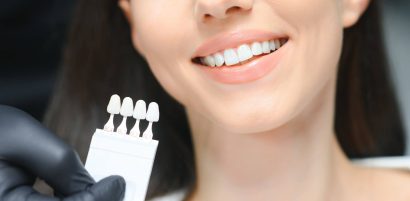
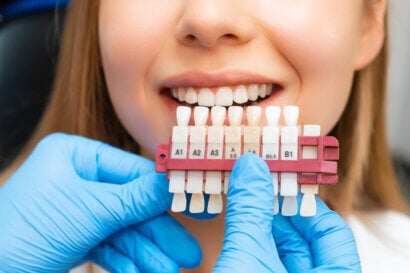
Before and after a whitening session at The Smile Bar: a change of shade, not of enamel.
Common myths about remineralizing teeth
- Myth: you can heal a cavity naturally. Fact: only early lesions can be reversed. A cavity needs a dentist.
- Myth: enamel grows back. Fact: enamel can be strengthened, but lost enamel doesn’t regrow.
- Myth: oil pulling remineralizes teeth. Fact: the ADA doesn’t recommend oil pulling, as there are no reliable studies showing it reduces cavities or improves oral health.
- Myth: salt water rebuilds enamel. Fact: a salt water rinse can soothe your gums, but it doesn’t supply the calcium, phosphate or fluoride that enamel needs.
- Myth: only fluoride matters. Fact: fluoride works together with the calcium and phosphate in your saliva, which is why diet and saliva flow count too.
Key takeaways
- You can remineralize early enamel damage, not a cavity, and lost enamel doesn’t grow back.
- The most effective habits: fluoride toothpaste twice a day (spit, don’t rinse), fewer sugar and acid attacks, sugar-free gum and water, and a diet with dairy, fish, greens and seeds.
- Results take months, and some white spots stay visible.
- See a dentist for spots, sensitivity or pain.
Teeth whitening at The Smile Bar, Bangkok
The Smile Bar is a teeth whitening studio, not a dental clinic. If your teeth are healthy and you’d like a brighter shade:
- Single Whitening: 1 × 20 minutes, 2,399 THB
- Double Whitening: 2 × 20 minutes, 4,399 THB
- Triple Whitening: 3 × 20 minutes, 5,799 THB
Book online, or see our teeth whitening prices page. We’re on the ground floor at 392/27-28 Siam Square Soi 5, next to BTS Siam, open every day from 10 am to 8 pm.
Frequently asked questions
How can I remineralize my teeth naturally?
Brush twice a day with a fluoride toothpaste and don’t rinse afterwards, limit sugary and acidic snacks between meals, chew sugar-free gum after meals, drink water and eat calcium- and phosphate-rich foods such as cheese, yogurt, fish, leafy greens and seeds.
Can you fully remineralize teeth?
Only early damage. A white spot lesion can be stopped and partly or fully reversed, but lost enamel doesn’t grow back and a cavity can’t be remineralized. It needs a filling.
Can a cavity heal on its own?
No. Once the enamel surface has broken down into a hole, the damage is permanent and a dentist needs to repair it. Remineralization only works before that stage.
How long does it take to remineralize teeth?
There’s no fixed timeline. Changes in early lesions are gradual and usually measured over months. Some white spots stop progressing but stay visible for years.
What foods help remineralize teeth?
Dairy products like cheese, milk and plain yogurt, fish (especially with edible bones, like sardines), eggs, leafy greens, almonds, sesame and chia seeds. Cutting down on sugary and starchy snacks matters just as much.
Can you remineralize teeth without fluoride?
Partly. Saliva, a low-sugar diet and sugar-free gum all support remineralization, and nano-hydroxyapatite toothpaste is a fluoride-free option with promising but limited evidence. Fluoride remains the best-studied option.
Is hydroxyapatite toothpaste better than fluoride?
Not proven. A 2025 meta-analysis found similar results for both on early lesions, but it was based on only four studies in young people. Fluoride has far more evidence behind it.
Does saliva remineralize teeth?
Yes. Saliva neutralizes acids and brings calcium and phosphate back to the enamel. Chewing sugar-free gum and staying hydrated help keep it flowing.
Does salt water remineralize teeth?
No. Salt water rinses can soothe irritated gums, but they don’t add the minerals enamel needs.
Does remineralizing teeth make them whiter?
No. Remineralization strengthens enamel and can make early white spots less noticeable, but it doesn’t change the overall shade of your teeth. That’s what whitening does.
Can teeth be remineralized?
Yes, at the early stage. Weakened enamel and white spots can regain minerals from saliva and fluoride. A cavity can’t.
Can you restore tooth enamel naturally?
You can strengthen enamel that is weakened. You can’t regrow enamel that has been lost.
Does xylitol remineralize teeth?
Not directly. Xylitol doesn’t feed decay-causing bacteria, and chewing sugar-free gum boosts saliva. The evidence that xylitol itself reduces cavities is weak.
What are the signs that teeth are remineralizing?
A white spot that looks shinier, feels smooth and hard, and stops growing. Only a dentist can confirm it.
Does teeth whitening demineralize enamel?
Slightly and temporarily. Studies in people find that saliva restores the enamel surface, typically within one to two weeks.