0

Teeth whitening doesn’t usually hurt, but it often causes temporary tooth sensitivity. For most people it’s mild, and it usually settles within a few days.
Quick answer
- What it feels like: short, sharp twinges (“zingers”) or teeth that react to cold. Not a constant ache.
- How long: usually gone by the fourth day, according to the American Dental Association.
- When to worry: strong or throbbing pain, pain in one tooth only, swelling, or no improvement after several days. See a dentist.
Does teeth whitening hurt? What it actually feels like
Most people feel nothing during the session itself. If something happens, it’s one of two things:
| Teeth | Gums | |
|---|---|---|
| What you feel | Short, sharp twinges that come and go, or sensitivity to cold drinks and air | Tingling or a mild sting where gel touched the gum |
| When | During the session or in the hours and days after | During or just after the session |
| How long | Usually a few days at most | Usually shorter |
Why teeth whitening causes sensitivity
- The gel passes through the enamel. That’s how it reaches the pigments that discolour the tooth.
- The nerve reacts. The peroxide can reach the inside of the tooth and irritate it for a while.
- The enamel isn’t thinned. Sensitivity is a temporary reaction, not a sign that your teeth have been damaged.
How common is it?
Common. The American Dental Association says temporary, mild to moderate sensitivity can occur in up to two-thirds of people in the early stages of whitening. That figure comes from whitening with trays and home products.
In one clinical trial of tray whitening, about half of the participants reported mild sensitivity, one in ten moderate, and 4 in 100 severe.
How long does sensitivity last after whitening?
| When | What’s common | What to do |
|---|---|---|
| During the session | Nothing, or an occasional twinge | Say so straight away |
| The first evening | Twinges are most likely now | Avoid very cold, very hot and acidic food and drinks |
| Days 1 to 3 | Sensitivity fades | Soft brush, lukewarm water, room-temperature drinks |
| Day 4 | Usually gone | Back to normal |
| More than a week | Uncommon | See a dentist |
These are typical timings, not a promise. Some people feel nothing at all, and a few stay sensitive for longer.
What’s normal and what isn’t
| Normal | Not normal: see a dentist |
|---|---|
| Short twinges that come and go | Constant or throbbing pain |
| Sensitivity to cold | Pain that wakes you at night |
| Several teeth affected in the same way | Strong pain in one tooth only |
| A little better every day | No improvement after several days |
| Mild tingling of the gums | Swelling, a sore that doesn’t heal, or fever |
If your pain feels unbearable after whitening, don’t wait it out. Strong pain can point to a cavity, a crack or exposed root that was already there.
Who is more likely to get sensitive teeth after whitening?
| If you have | Why it matters | What to do |
|---|---|---|
| Teeth that are already sensitive | They tend to react more | Tell us before you start, and begin with one session |
| Receding gums | The exposed root has no enamel | Ask a dentist first |
| Worn enamel | Less protection over the nerve | Ask a dentist first |
| An untreated cavity or crack | The gel can reach the nerve directly | Have it treated before whitening |
| Long or back-to-back sessions planned | More contact time with the gel | Start with one session and see how you feel |
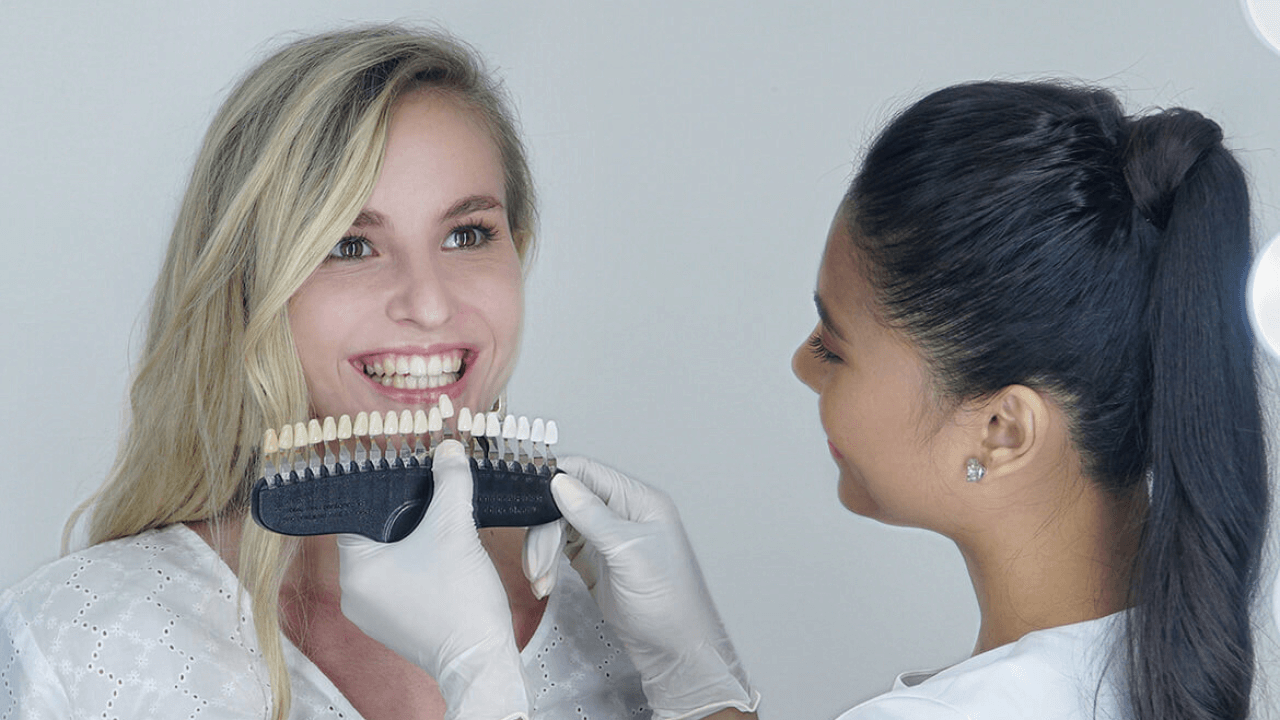
Your shade is checked before and after each session.
Before, during and after: a checklist
Before
- Have cavities and gum problems treated first. If you have tartar, consider a cleaning before whitening.
- Tell us if your teeth are sensitive.
- Many dentists suggest using a toothpaste for sensitive teeth in the days before. The evidence that it prevents whitening sensitivity is limited, but it does no harm.
During
- Speak up at the first twinge.
- You can stop after one 20-minute session and decide later whether to do another.
After: the first 48 hours
- Skip iced drinks, very hot drinks and acidic food.
- Brush gently with a soft brush and lukewarm water.
- Follow the food rules in our guide to what to eat after teeth whitening.
Sensitive teeth after whitening: what to do right now
- Avoid the triggers. Nothing very cold, very hot or acidic.
- Drink at room temperature. Water is best.
- Brush gently. Soft brush, lukewarm water.
- Try a toothpaste for sensitive teeth. Often recommended, though the evidence is limited.
- If you need it, take the over-the-counter painkiller you normally use, following the label.
- Don’t whiten again until the sensitivity has gone.
It should ease day by day. If it doesn’t, see a dentist.
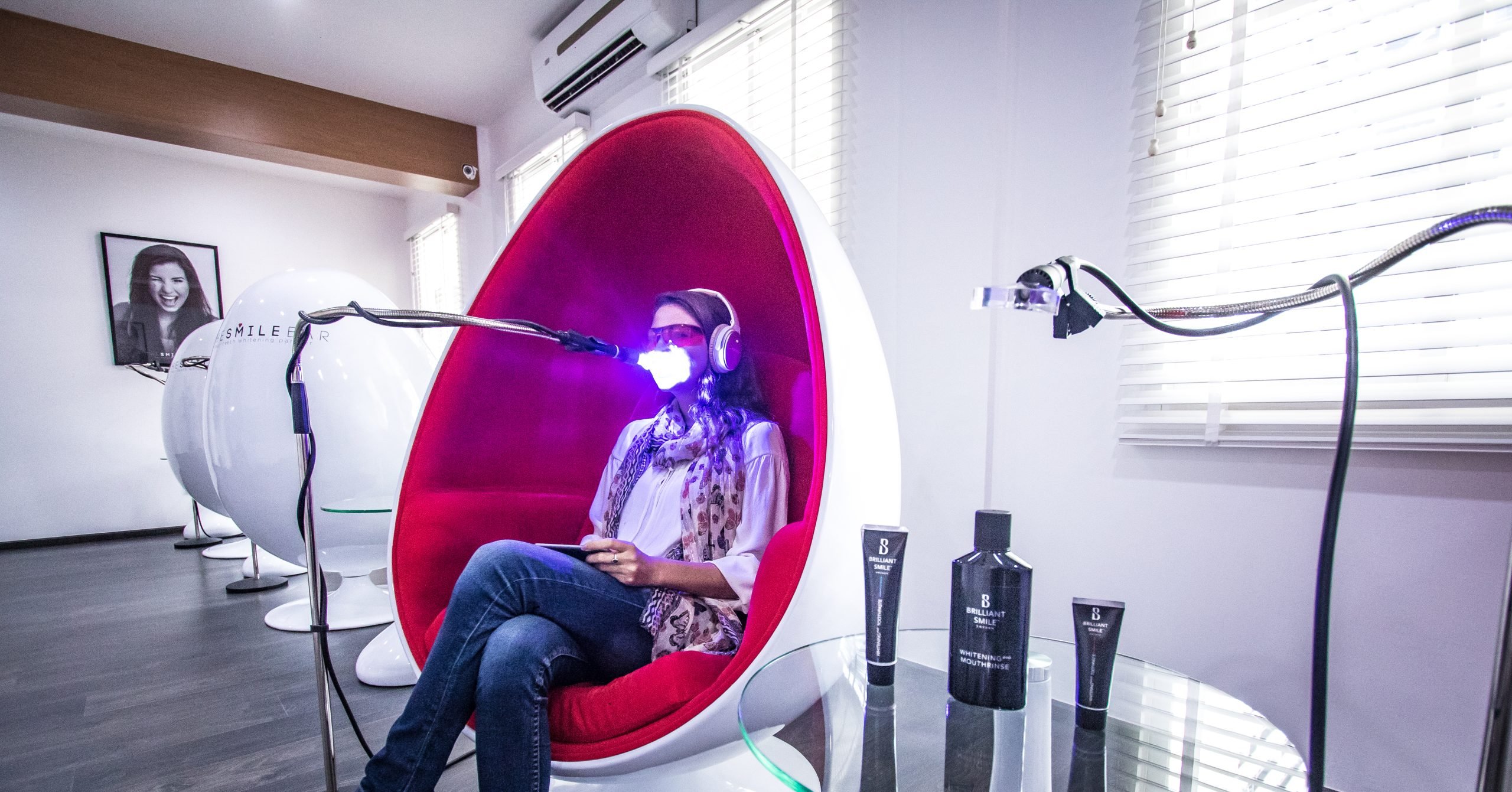
An LED whitening session at The Smile Bar, Bangkok.
Teeth whitening for sensitive teeth: how The Smile Bar approaches it
- A low-concentration gel. Our gel is pH-neutral and water-based (Brilliant Smile, Sweden), designed to limit sensitivity.
- Short sessions. 20 minutes at a time. You can do one, two or three in a visit.
- Start small. Book a Single Whitening and add a session on the day if your teeth feel fine.
- A check first. Every package starts with a look at your teeth and your starting shade.
- Nano Protection. An optional fluoride varnish (750 THB) that helps remineralise the enamel.
Is there such a thing as painless teeth whitening?
No one can honestly promise that. Sensitivity is possible with every peroxide whitening. What you can do is lower the odds: a gentler gel, shorter sessions, and healthy teeth before you start. Research on whitening suggests lower concentrations cause less sensitivity, although the evidence isn’t strong.
Who shouldn’t whiten
- Women who are pregnant or breastfeeding
- People who wear braces
- Anyone under 18
If you have a cavity, a toothache or sore gums, have them treated first.
When to see a dentist
- The pain is strong, constant or throbbing.
- It isn’t improving after several days.
- It’s in one tooth only.
- You have swelling or fever.
Sources: American Dental Association, Whitening; clinical trial of tray whitening, JADA 2002; Cochrane review of home whitening; review of light-activated whitening, 2018.
Book your session at The Smile Bar
Ready to try? Book a Single Whitening at The Smile Bar in Siam Square. Prices are on our teeth whitening prices page, and Is teeth whitening safe? covers side effects in more detail.
Frequently asked questions
Does teeth whitening hurt?
Usually not. The most common side effect is temporary tooth sensitivity: short twinges or teeth that react to cold. For most people it’s mild and settles within a few days.
How long does sensitivity last after teeth whitening?
It usually resolves by the fourth day. If your teeth are still sensitive after a week, see a dentist.
Are zingers after whitening dangerous?
No. Zingers are short, sharp twinges caused by the nerve reacting to the gel. They’re unpleasant but temporary. Constant or throbbing pain is different and should be checked.
Does whitening damage enamel?
Whitening doesn’t thin the enamel. Sensitivity comes from the gel passing through the enamel and irritating the nerve for a while.
Does the LED light make sensitivity worse?
Recent reviews of in-clinic whitening have not found that light changes the risk of sensitivity. An older review found the opposite. The gel matters more than the lamp. More in Zoom vs LED whitening.
Can I whiten my teeth if they’re already sensitive?
Often yes, but tell us first and start with a single 20-minute session. If you have receding gums, worn enamel or a cavity, see a dentist before whitening.
How soon can I whiten again?
Wait until any sensitivity has completely gone. Planning around an event? See how to whiten teeth fast.
What should I eat and drink if my teeth are sensitive after whitening?
Room-temperature water and soft, non-acidic food. Avoid iced drinks, very hot drinks and citrus.