0
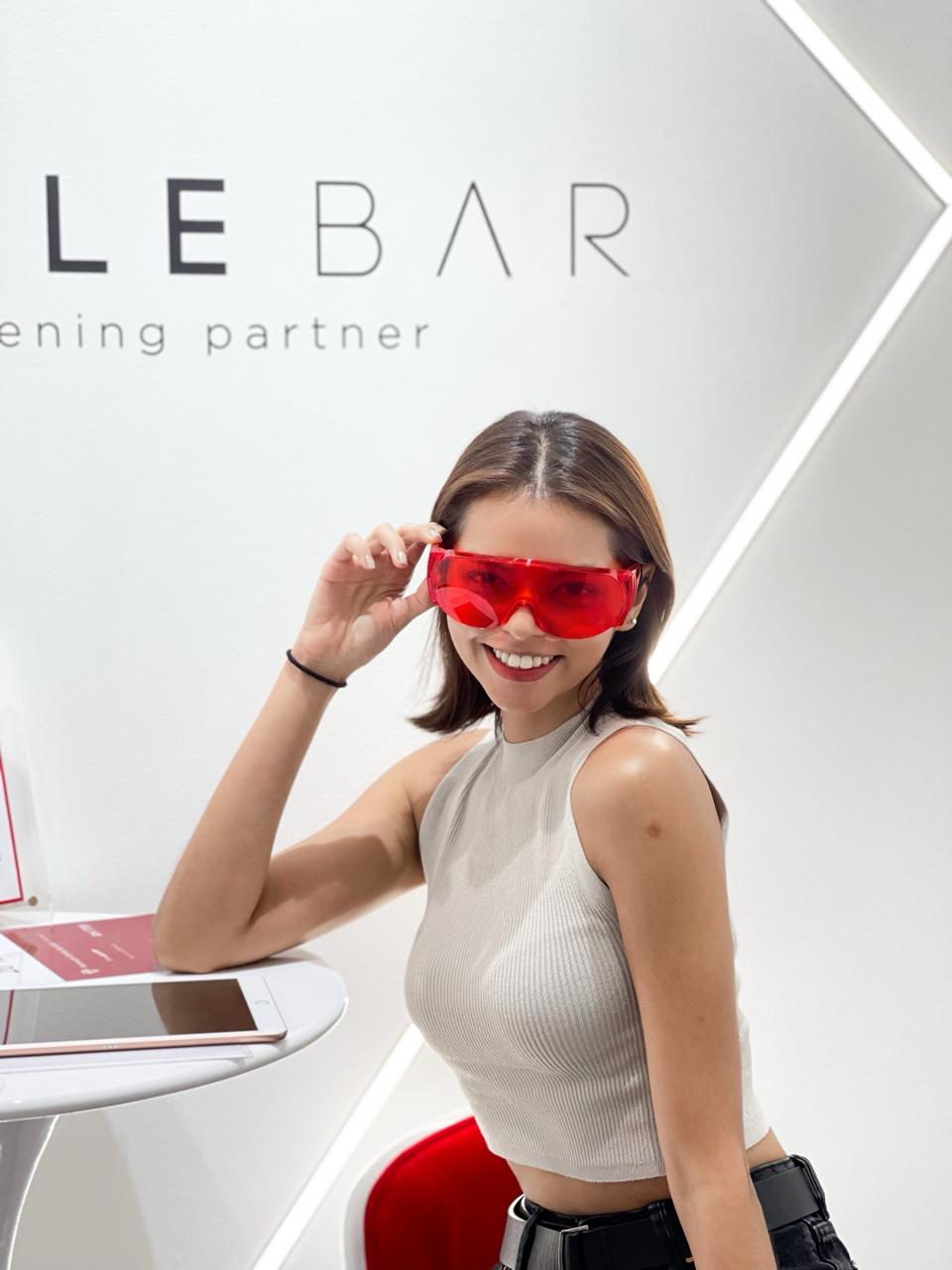
How safe is teeth whitening?
Teeth whitening is generally safe when it’s done correctly: with a suitable product, for the right amount of time, on teeth and gums that have been checked first. The safety of the procedure depends on the method used, the strength of the whitening gel and the condition of your teeth.
The most common side effects are temporary tooth sensitivity and gum irritation. Both usually go away on their own. Whitening also has limits: it only lightens natural teeth, not crowns, veneers or fillings.
At The Smile Bar, a whitening-only studio in Siam Square, Bangkok, every package starts with an oral examination. We use a pH-neutral, low-concentration gel from Brilliant Smile (Sweden), activated by a UV-free LED lamp in 20-minute sessions. The treatment is designed to keep sensitivity to a minimum.
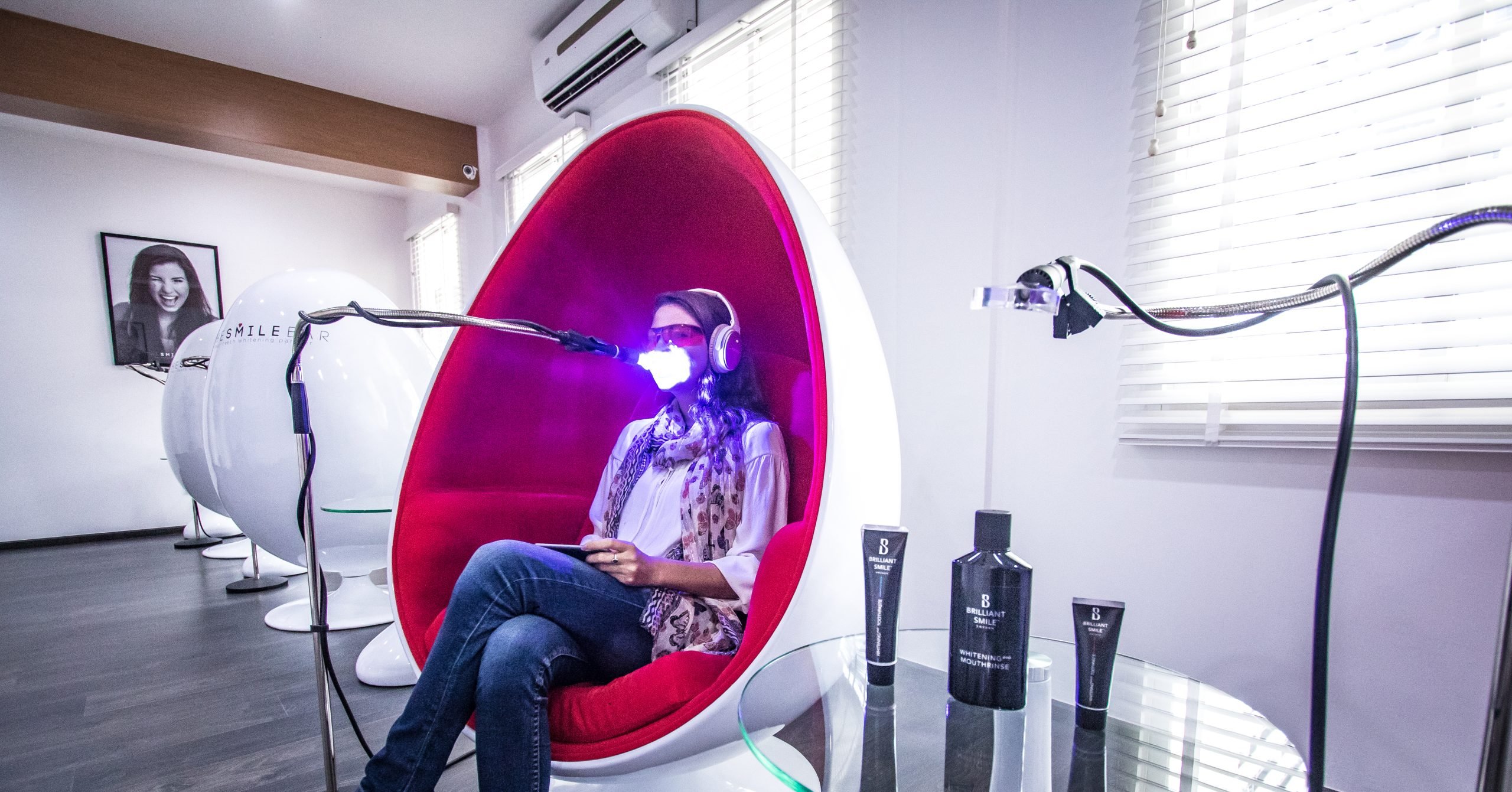
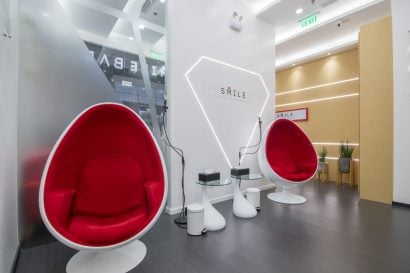
LED teeth whitening at The Smile Bar Bangkok
How the procedure works, and why safety matters
Tooth whitening treatments rely on bleaching agents, commonly hydrogen peroxide or carbamide peroxide, to break down stains and brighten your smile. “Teeth whitening” and “teeth bleaching” usually mean the same thing: a peroxide-based treatment that changes the colour of the tooth itself. The safety of the treatment depends on the whitening method, the strength of the agent, how long it stays on your teeth, and the condition of your teeth and gums.
Tooth discoloration can be extrinsic (food, drinks, smoking) or intrinsic (ageing, medications, trauma). Whitening works best on extrinsic stains. Deeper, intrinsic stains respond less and may need a different approach.
Bleaching can cause problems if it’s overused or misapplied, which is why you should see your dentist before any whitening if you have tooth pain, cavities or gum problems.

A shade guide helps track whitening progress and choose the brightness level that looks natural for you.
Professional teeth whitening vs. at-home teeth whitening kits
Professional teeth whitening and at-home products like strips, trays or whitening toothpaste differ in safety and results. Over-the-counter options can cause sensitivity and gum irritation, especially when strips or trays don’t fit well and the gel touches your gums. Results can be uneven, and whitening toothpaste mainly removes surface stains.
The UK’s NHS warns that whitening done in beauty salons, or with kits bought online or in pharmacies, may not work as well and may harm your teeth and gums.
At The Smile Bar, in-studio whitening is done in one visit: your teeth are checked, the gel is applied, and a UV-free LED light activates it for 20 minutes per session. Depending on your stains, teeth usually get 2 to 9 shades lighter, 5 on average.
Risks and side effects of teeth whitening: what you should know
Like any cosmetic procedure, teeth whitening has potential risks and side effects. These include:
- Temporary tooth sensitivity, often to cold or sweet food and drink
- Gum irritation, such as sore gums or white patches where the gel touched them
- Enamel changes if products are misused or overused
- Uneven colour if you have crowns, veneers or fillings, which don’t whiten
The most common side effect is tooth sensitivity, especially if your teeth are already sensitive. According to the American Dental Association (ADA), transient mild to moderate sensitivity can affect up to two-thirds of people during the early stages of bleaching. The ADA also notes that gum irritation is generally mild and short-lived, and usually comes from poorly fitting trays or gel touching the gums.
Whitening should be postponed if you have active cavities or gum disease: see a dentist first. Whitening doesn’t change the colour of crowns, veneers or fillings. If you have them on your front teeth, whitening your natural teeth can make them stand out, so talk to your dentist before you start.
How long do whitening side effects last?
Sensitivity and gum irritation are usually temporary. With strip or tray treatments, the ADA reports that sensitivity tends to appear within two to three days of starting and usually resolves by the fourth day after treatment ends. If pain is strong or doesn’t go away, see a dentist.
Does teeth whitening damage enamel?
Used as directed, peroxide whitening doesn’t work by scraping enamel away. According to the ADA, hydrogen peroxide diffuses through the enamel and reacts with the coloured compounds inside the tooth, which lightens its colour.
That doesn’t mean there’s no effect at all. The ADA notes that some research suggests bleaching may alter the surface roughness of enamel. The risk of damage goes up with overuse, very strong or unregulated products, and abrasive DIY methods. Concentration matters too: in a systematic review cited by the ADA, lower concentrations of hydrogen peroxide caused less tooth sensitivity during in-office whitening.
That’s why The Smile Bar uses a pH-neutral, water-based, low-concentration gel, and why it’s best not to whiten more often than you need to.
Teeth whitening safety in Bangkok: what to check before you book
In Bangkok, teeth whitening is offered by dental clinics, specialised whitening studios and budget beauty salons. Not all whitening treatments are equal. Whatever you choose, check that the provider:
- Checks your teeth before starting and asks about pregnancy, braces and sensitivity
- Tells you which product is used, and where it comes from
- Uses a UV-free light, or no light at all
- Keeps tools and surfaces clean and uses single-use items where needed
- Publishes prices and explains what’s included
- Gives you aftercare advice for the days after your session
Before booking, you can check prices and what each package includes on our prices page. Planning whitening during a trip? Read our guide to teeth whitening in Thailand.

Depending on the type of stains, LED whitening at The Smile Bar lightens teeth by 2 to 9 shades, 5 on average.
Is LED teeth whitening safe?
LED whitening can be safe when the gel is suitable for you and the session is time-limited. The light doesn’t whiten your teeth on its own: it’s used together with the peroxide gel. What matters most for safety is the gel’s concentration and how long it stays on your teeth. Research on in-office whitening links higher peroxide concentrations with more sensitivity.
The Smile Bar uses a European-made, UV-free LED lamp, not a laser and not UV light. Each session lasts 20 minutes, and you can do one, two or three sessions in a single visit.
Want to compare methods? Read our guides to cool light (LED) teeth whitening and laser vs. LED vs. Zoom whitening.
Ready to try LED whitening in Bangkok? Book your session online.
Real results: before and after teeth whitening in Bangkok
How white your teeth get depends on the type of stains you start with. At The Smile Bar, teeth usually get 2 to 9 shades lighter, 5 on average, measured on a shade guide before and after your session. You can see more before and after photos on our results page.

Teeth before and after whitening at The Smile Bar Bangkok.
What to expect during and after whitening at The Smile Bar
- Briefing and oral examination. We explain how the treatment works, check your teeth and record your starting shade.
- Pre-whitening cleaning. You rinse with whitening mouthwash, then brush with whitening toothpaste.
- Whitening. The gel is applied and activated by the UV-free LED lamp for 20 minutes per session: one session for Single Whitening (about 30 minutes in total), two for Double (about 60 minutes), three for Triple (about 90 minutes).
- Final shade and aftercare. We compare your new shade with your starting one and give you aftercare advice, plus a whitening toothpaste and mouthwash to take home.
If you want a deeper clean first, Cleaning & Scaling is available as an add-on.
Mild tooth sensitivity may occur after whitening. It is usually temporary.
For 72 hours after whitening, avoid strongly coloured or acidic food and drinks (coffee, tea, red wine, dark sodas, chocolate, red meat, soy sauce, chilli sauce, tomatoes, citrus, vinegar) and smoking. The exception: if you add Nano Protection, a triple-fluoride sealing varnish applied right after your session, you can eat and drink normally straight away. It also helps remineralise your teeth.
Who should not get their teeth whitened?
At The Smile Bar, we don’t whiten teeth for people who:
- are pregnant or breastfeeding;
- wear braces;
- are under 18.
In general, it’s also best to see a dentist before whitening if you have cavities, gum disease, worn enamel, exposed roots, or crowns and fillings on your front teeth.
Different types of teeth whitening explained
In-office or in-studio teeth whitening
The fastest way to whiten your teeth. It’s done in a professional setting, with a whitening gel applied for a set time and often activated by an LED light. Your teeth are checked before you start, and the whole treatment is done in one visit.
At-home teeth whitening options
These include whitening strips, whitening toothpaste, gel trays and whitening pens. They’re convenient, but they usually take longer, give less consistent results, and carry a higher risk of misuse or sensitivity if you don’t follow the instructions.
Natural and alternative whitening methods
Some people try DIY methods like baking soda or oil pulling. There’s limited scientific support for them, and abrasive methods can wear enamel or irritate gums. Speak with your dentist before trying them.
Tooth sensitivity and whitening: what you need to know
Tooth sensitivity is a common concern with teeth whitening. The ADA explains that it’s possibly due to temporary inflammation of the pulp, the living tissue inside the tooth, caused by peroxide exposure.
At The Smile Bar, the gel is low-concentration and pH-neutral, and sessions last 20 minutes each. If your teeth are already sensitive, tell the team during the briefing so we can help you choose the right package.
Managing sensitivity after whitening
- Brush gently with a non-abrasive toothpaste, like our peroxide-free whitening toothpaste
- Avoid very hot or very cold food and drinks while your teeth feel sensitive
- Follow all post-whitening care instructions, including the 72-hour rule
Mild sensitivity is normal and should fade quickly. If it’s strong or lasts, see a dentist.
Why talking to your dentist before whitening matters
If you have any doubts about the health of your teeth, see your dentist before whitening. Your dentist can:
- Identify existing conditions like decay, gum disease or worn enamel
- Check whether you have crowns or fillings that won’t whiten
- Treat any problem that should be fixed before a cosmetic treatment
At The Smile Bar, every package starts with a briefing and an oral examination to check that whitening is suitable for you. This check doesn’t replace a regular dental check-up. Skipping any kind of check is one of the most common causes of poor results and increased sensitivity in DIY whitening.

Choosing a target shade before whitening.
Safe and effective whitening at The Smile Bar Bangkok
Tooth whitening is a popular cosmetic treatment, but it should be done right. Here’s what a whitening session at The Smile Bar includes:
- An oral examination and shade assessment before whitening
- A pH-neutral, low-concentration gel from Brilliant Smile (Sweden)
- A UV-free LED lamp, with 20-minute sessions
- Clear contraindications: no whitening during pregnancy or breastfeeding, with braces, or under 18
- Aftercare advice, plus a whitening toothpaste and mouthwash to take home
Whether you live in Bangkok or you’re visiting Thailand, you can compare our packages on the prices page and book online.
Conclusion – TL;DR
Teeth whitening is generally safe when done properly: after a check of your teeth, with a suitable gel, for a limited time. The most common side effects, sensitivity and gum irritation, are usually temporary. At The Smile Bar Bangkok, whitening uses a pH-neutral, low-concentration gel and a UV-free LED lamp, and isn’t offered during pregnancy or breastfeeding, with braces, or under 18. If you have cavities, gum problems or crowns on your front teeth, see your dentist first.
Frequently asked questions
Is teeth whitening safe?
Yes, teeth whitening is generally safe when it’s done correctly, on healthy teeth and gums, with a suitable product. The most common side effects are temporary sensitivity and gum irritation. The risks go up with overuse, unregulated products and DIY methods.
Is teeth whitening safe for sensitive teeth?
Often yes, but sensitivity is the most common side effect, so tell your provider first. At The Smile Bar, your teeth are checked before treatment and the gel is low-concentration and pH-neutral, which is designed to keep sensitivity to a minimum.
Does teeth whitening damage enamel?
Used as directed, peroxide whitening doesn’t scrape enamel away: it reacts with the coloured compounds inside the tooth. Some research suggests it may slightly change the enamel surface, and the risk of damage rises with overuse, very strong products and abrasive DIY methods.
How long does sensitivity last after teeth whitening?
It’s usually temporary. The ADA reports that with strip or tray treatments, sensitivity usually resolves by the fourth day after treatment ends. If it’s strong or doesn’t go away, see a dentist.
How long do whitening results last?
Whitening isn’t permanent. How long it lasts depends mostly on your diet, smoking and oral hygiene. You’ll receive aftercare advice and a whitening toothpaste and mouthwash to help maintain your results.
What are the risks of teeth whitening?
Possible side effects include temporary tooth sensitivity, gum irritation and, if products are misused, changes to the enamel. Whitening also doesn’t change the colour of crowns, veneers or fillings, which can leave your smile uneven.
Can yellow teeth be white again?
Yes, yellow teeth can often be whitened effectively, especially when the discoloration comes from coffee, tea, smoking or other external factors. Deeper, internal stains respond less well.
Are LED teeth whitening treatments safe?
LED whitening can be safe when the gel is suitable for you and sessions are time-limited. The light is used together with the whitening gel, whose concentration matters most for sensitivity. At The Smile Bar, the lamp is UV-free, the gel is low-concentration and sessions last 20 minutes.
Is teeth whitening safe during pregnancy or breastfeeding?
Whitening products haven’t been well studied in pregnancy or breastfeeding. MotherToBaby notes that little peroxide is likely to reach the body when a product is used as directed, but as a precaution, The Smile Bar doesn’t whiten teeth during pregnancy or breastfeeding. Talk to your doctor or dentist if you have questions.
What whitening methods are safest for enamel?
Treatments that use a regulated, lower-concentration peroxide gel for a limited time, after a check of your teeth. Avoid overusing products and abrasive DIY methods. The Smile Bar uses a pH-neutral, water-based, low-concentration gel.
Are at-home whitening strips safe?
They can be safe if you follow the instructions, but they often give uneven results and can irritate your gums or make your teeth sensitive, especially if they don’t fit well.
Is professional teeth whitening worth it?
Yes, if you want visible results in one visit rather than weeks of strips or trays. At The Smile Bar, teeth usually get 2 to 9 shades lighter, 5 on average, depending on the type of stains.
What are the best ways to whiten your teeth?
Professional whitening is the fastest way to get a visibly brighter smile. Whitening toothpastes and strips can help with surface stains but usually give slower, less even results.